Kids Growth Vitamins
Best Multivitamin for Kids in 2026: Which One Actually Covers Calcium, Vitamin D and Growth Support?
We put four of the most-searched children's growth multivitamins side by side, the real calcium and vitamin D3/K2 content, the taste kids actually finish, the dosing safety for a 2 to 9 year old, and the price of running it for months, not days. One chewable multivitamin pulled clearly ahead.


Do Kids Really Need a Growth Multivitamin?
Fair question, and the honest answer is: it depends on the plate, not the marketing. A child who eats a genuinely varied diet, drinks fortified milk, and spends real time outdoors may already be covering most of what a growing body needs. But that describes fewer households than the supplement aisle would like you to believe.
Picky eating is the norm in the 2 to 9 age range, not the exception. Calcium intake drops the moment a child decides milk is "gross." Vitamin D is mostly a sunlight nutrient, and modern kids spend more hours indoors and in sunscreen than any generation before them. The result, documented again and again in pediatric nutrition guidance, is a very specific, very common gap: not enough calcium, not enough vitamin D, and almost no dietary vitamin K2 at all, right during the years when a child's skeleton is doing its most active building.
That is the actual case for a kids growth vitamin: not to override genetics, but to close a nutrition gap that shows up in survey after survey of what American kids actually eat in a week. It is also why so many parents end up comparing best kids vitamins lists and looking for real kids nutrition support, not just a bottle with a cartoon on the front. A good one is insurance. A bad one is candy with a health label. This test is about telling the two apart.
What Actually Matters When You Compare These Products
We scored every product on four things that determine whether a kids' multivitamin does anything useful for a young, growing body, not on flavor packaging or bottle design.
Real Calcium + Vitamin D3/K2 Content
The nutrients doing the actual bone-building work. Calcium for kids is the raw material, vitamin D3 is what lets the body absorb it, and vitamin K2 helps direct it to the skeleton instead of just passing through. Kids magnesium supports the same bone-metabolism process in the background. A "kids growth vitamin" that skips any one of these is only telling part of the story.
Taste a Picky Kid Will Actually Take Every Day
The best formula on paper does nothing sitting in the cabinet. We looked at real flavor and format feedback, because compliance, not chemistry, is what determines whether a children's growth vitamin actually gets taken for months in a row.
Age-Appropriate Dosing Safety for Young Kids
A 3 year old and an 8 year old do not need the same dose. We checked whether each product gives clear, tiered dosing by age, or hands every child ages 2 to 9 the exact same amount regardless of size.
Price for a Real Multi-Month Growth Routine
Nutrition support is not a one-week fix. We priced out what each product actually costs to run consistently for 3 to 6 months, the timeframe pediatric guidance and the brands themselves say is needed to see anything.
What Quality Kids Growth Vitamins Can Honestly Deliver
No supplement changes a child's genetics, and any product that promises added inches is not being straight with you. What real nutrition science supports is narrower, and still worth taking seriously:
- Calcium is the primary mineral deposited into bone, and the body's demand for it rises sharply during active childhood growth.
- Vitamin D3 is what allows the body to absorb and use that calcium in the first place, according to National Institutes of Health guidance on vitamin D.
- Vitamin K2 helps direct calcium toward the skeleton, an increasingly recognized companion nutrient to D3 and calcium rather than a standalone extra.
- Pediatric guidance from groups like the American Academy of Pediatrics consistently flags calcium and vitamin D as two of the nutrients American children are most likely to fall short on.
The honest framing: a quality kids growth vitamin gives a young child's growing body the calcium, D3 and K2 it needs during active bone-development years. It helps a child reach their own natural potential. It does not, and cannot, rewrite what that potential is.
60-Second Summary
- #1 NuBest Tall Kids is the only product in this test with calcium, vitamin D3, vitamin K2, magnesium and zinc all in one chewable tablet, with tiered dosing for ages 2-9 and multi-pack pricing built for a real multi-month routine.
- #2 Hiya Kids Daily Multivitamin is a clean, sugar-free chewable, but it is the most expensive option per month and its listed formula does not include vitamin K2 or magnesium.
- #3 Flintstones Complete Chewable is by far the cheapest option and the flavor kids already know, but it still relies on artificial dyes (Red 40, Yellow 6, Blue 2) per its own ingredient label.
- #4 L'il Critters Gummy Vites is an affordable, kid-approved gummy, but the standard formula skips iron and methylated B12/folate and contains added sugar.
The 2026 Kids Growth Multivitamin Ranking
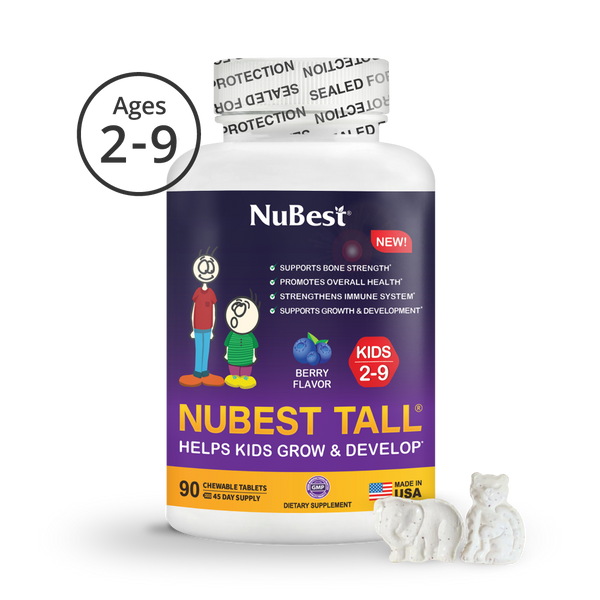
NuBest Tall Kids
Pros
- Only product tested with calcium, vitamin D3, vitamin K2, magnesium and zinc together in one tablet
- Doctor-formulated in the USA in a GMP- and HACCP-certified, FDA-registered facility
- Clear tiered dosing: 1 tablet under age 4, 2 tablets ages 4 and up, or crush into food
- 1,215+ customer reviews on the official product page
- Multi-pack pricing (6-pack, 12-pack) brings the per-bottle cost down for a real multi-month routine
Cons
- Highest single-bottle price in this test if bought one bottle at a time
- Chewable format, not a gummy, some very young or texture-sensitive kids may need the crush-into-food method at first
$55 for a single 90-tablet bottle, about $48 per bottle at the 12-pack
See NuBest Tall Kids on the official siteCheck current pricing and multi-pack options at nubest.com
Hiya Kids Daily Multivitamin
Pros
- Zero added sugar, no artificial dyes, sweetened with monk fruit
- Made with organic fruits and vegetables, 15 listed vitamins and minerals
- Auto-ship subscription removes the reorder step
Cons
- $30 per month is the most expensive recurring price in this test
- Its listed formula does not include vitamin K2 or magnesium
- Reviewers report mixed reactions to the taste, and note the subscription can be difficult to cancel
$30 per month, subscription required
Flintstones Complete Chewable
Pros
- By far the cheapest option in this test, roughly $10-22 per bottle
- Classic fruity chewable flavor most kids already recognize and accept
- Sold at essentially every drugstore and grocery store in the US
Cons
- Contains artificial colors Red 40, Yellow 6 and Blue 2, per its own ingredient label
- Magnesium is not part of the active nutrient list (only appears as an inactive tablet ingredient)
- Same dose regardless of a child's exact age or weight within the labeled range
$9.97 to $21.99 depending on count size
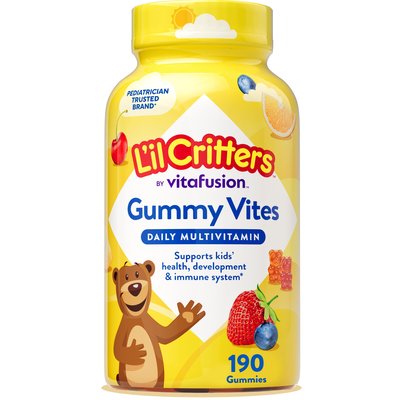
L'il Critters Gummy Vites
Pros
- Affordable at roughly $22 for 190 gummies
- Gummy-bear shape and sweet taste many kids ask for by name
Cons
- Standard formula contains no iron and no methylated B12/folate
- Contains added sugar (glucose syrup and sugar) in the standard formula
- Gummy-only format, no chewable-tablet option for families avoiding added sugar
~$22 per 190-count bottle